Italy missing the World Cup for the third consecutive time is a real (real) bad look for Serie A.
It’s not just Como 1907’s fault, although Cesc Fàbregas’ side has become the face of a greater problem. The richest club in Italy are notably lacking Italians, with only one actually playing: Edoardo Goldaniga. He’s played just fourteen minutes in Serie A, while Italians like Patrick Cutrone and Andrea Belotti — both once seen as the future of Calcio — have been pushed out the door.
That’s not to say Como should force players into the team. Neither Cutrone nor Belotti has enjoyed great success post-Como, and they didn’t pre-Como, either. Manager Fàbregas has expressed a desire for the club to become more Italian, but has emphasized a lack of affordable, quality players. Similarly, the club’s billionaire owners are interested in developing local talent.
None of that changes the fact that Como simply aren’t very Italian. Tune into a game, and you’ll see French Jean Butez in goal. Argentine Nico Paz is impressing in midfield. Greek Anastasios Douvikas is leading the line. Spanish Fabregas on the touchline. The only thing Italian about Como is the city they play in. The thing is, Como are far from the exception.
Consider Hellas Verona. With eight games left, Hellas Verona are seemingly destined for relegation, nine points from safety. They have used as many Italian field players as Como has in Serie A — one. Now, Roberto Gagliardini has played substantially more minutes than Goldaniga, but he’s 31 and approaching the tail end of his career.
The argument for Como — there are no Italians at the same level as their signings for a reasonable price — is at least somewhat valid. There’s no Italian Nico Paz, who was signed from Real Madrid for a reported €6 million and is now one of the best players in Serie A. For Hellas Verona, that argument doesn’t hold up. If their players were that good, they wouldn’t be second-last.
Even Italy’s most historic sides have turned away from Italian players. When Juventus reached the Champions League Final in 2015, they did so with a core of Gianluigi Buffon, Leonardo Bonucci, Giorgio Chiellini, Andrea Pirlo, Claudio Marchisio, etc. This year, just four Italians get regular minutes for the Old Lady. For Serie A leaders Internazionale, it’s six; for Milan, it’s just three.
Missing the World Cup one time, for a country of Italy’s status, is unacceptable, but it could be considered a fluke. Missing two consecutive tournaments is an embarrassment, but at least the Azzurri won the Euros in between.
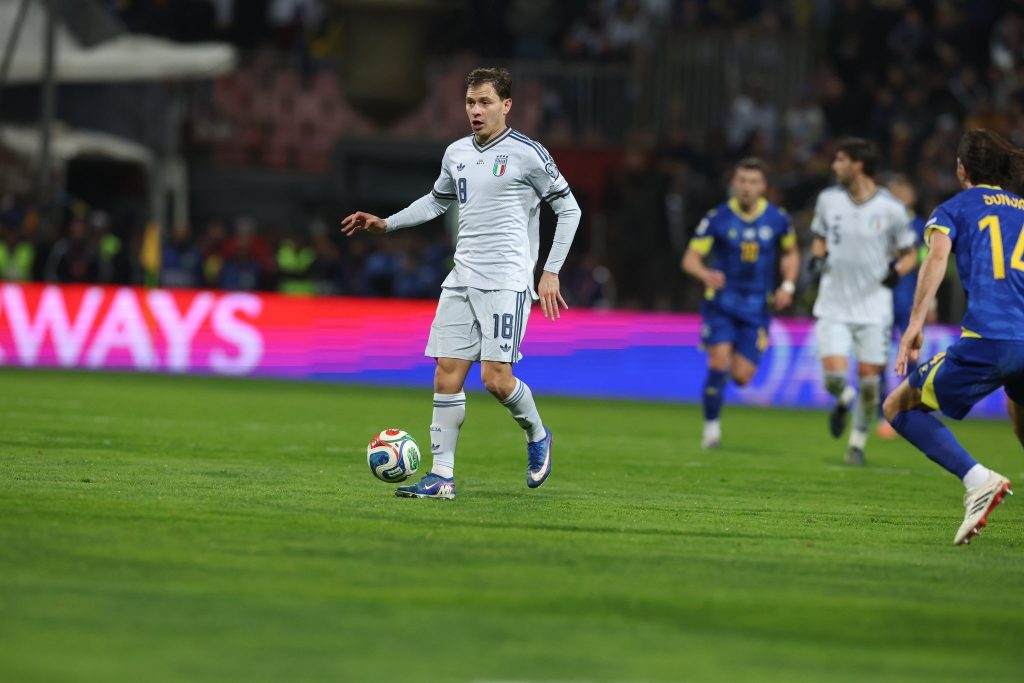
But Italy just lost on penalties to Bosnia and Herzegovina, sending Bosnia to the World Cup. For Italy, it’s a third-straight miss. Bosnia, like Italy, had not qualified since 2014. The Azzurri are rapidly reaching minnow status.
Head coach Gennaro Gattuso has already stepped down, but that won’t change much. It’s hard to ignore the fact that the Serie A simply isn’t producing many stars, and teams aren’t relying on Italian players. With the Azzurri in crisis mode, Serie A needs drastic changes.
The two most successful national teams in Europe right now are France and Spain. Both have leagues renowned for developing local talent in Ligue 1 and La Liga. The top dogs — PSG in France, Real Madrid and Barcelona in Spain — have clear domestic (and academy) presences in the squad.
For PSG, bringing Ousmane Dembélé back to France helped win the Champions League. Barcelona have one of the best players in the world in Lamine Yamal, who came from their own academy. They finished one and two in the Ballon d’Or race last year, respectively.
Now, pinning all of Italy’s problems on foreign players is unfair. In general, leagues benefit from investing in talent from abroad. Napoli, for instance, were one of the most exciting teams in Europe thanks to Victor Osimhen and Khvicha Kvaratskhelia. Both moved on for big profits, which means Napoli benefited both from a sporting perspective and financially.
But this recruitment strategy leads to some major problems. First, Serie A teams still aren’t spending money well; second, there’s little incentive to play Italian players. Álvaro Morata is a great example of both.
In general, Como’s recruitment is excellent. Morata, though, is something of a puzzling signing. Now 33, the Spanish striker has played for three clubs in two years, including two Serie A sides, Milan and Como. Morata has yet to score this season.
There’s only limited upside in signing a 33-year-old nomadic striker. Morata was never going to raise Como’s ceiling much, and zero goals from 19 Serie A games is a poor return. These are the signings the Serie A and FIGC should look to eliminate. Limiting the foreign squad spots available ensures the signings are game changers and not squad fillers.
The aforementioned Andrea Belotti joined Cagliari from Como this summer. Belotti has not played since September because of injuries. He still has more Serie A goals than Morata this season. In an ideal world for Calcio, Belotti, not Morata, is the backup, and Douvikas starts. The goal isn’t to remove players like Douvikas from Serie A, but to increase and encourage the use of Italians.
Now, Morata is a rare miss from Como. But consider other high-profile, low-impact signings that have come into the Serie A from abroad recently. Mehdi Taremi, signed from Porto, was Inter’s backup striker, but managed only three goals in 43 games. Academy talent Pio Esposito has been a massive upgrade, with nine goals in 40 games.
Which brings up another fiercely debated point — the use of young players. It’s a running joke that Serie A youngsters are older than their counterparts. Antonio Vergara is just now getting his chance at Napoli at the age of 23 after multiple loan spells. Yamal, who has since become a crucial player for Spain, played his first full season in La Liga when he was 16.
Given Italian teams’ record in youth tournaments, the argument that the Azzurri have no promising talent holds no merit. It’s just a question of getting a chance after the initial breakthrough. Only Niccolò Pisilli and Pio Esposito have been real successes from Italy’s side who reached the U20 World Cup Final three years later.
Luca Reggiani and Samuele Inácio both elected to leave Serie A academies and head to Borussia Dortmund. Reggiani is now a starter, while Inácio recently debuted against Bayern Munich. Cagliari-born striker Nicolò Tresoldi started in the Italian system, but he, too, moved to Germany and is now a German youth international. The talent is still there, but the opportunities are not.
In general, Serie A teams are reluctant to trust younger players. Enforcing mandatory nationality rules should increase demand and inflate the values of Italian players. This means that smaller teams may struggle to fill out their squads, but forces them to look for internal solutions — ie, turn to their academies.
Francesco Camarda was only 15 when he debuted off the bench for Milan. Now 18 and at US Lecce, his career has admittedly stalled, while Milan have cycled through aging journeyman strikers. Reduce the likelihood of signing squad depth options like Tammy Abraham, and there will be a greater incentive to develop the Camardas.
Cesare Casadei was a rising star with Inter, but did not play a single minute before he joined Chelsea for €15 million. Chelsea loaned him out several times before selling at a loss. Inter wasted the cash on the likes of Robin Gosens and Joaquín Correa, both of whom are now gone. Casadei hasn’t reached his potential. Everyone loses here.
With foreign roster limits, there’s more value for Inter in keeping a rising star like Casadei in the squad. Either Inter would want to keep him around, or they have more bargaining power against Chelsea and could potentially get an even higher fee.
The same is true of established players like Sandro Tonali, who plays for Newcastle, or Federico Chiesa, now at Liverpool. Azzurri stars become indispensable because of the need for a domestic core. Either they stay in Italy, or Serie A clubs demand more from rich Premier League sides
But, how would the rule be enforced when so much of the Serie A is foreign currently? Also, won’t this damage the quality of the league?
There is, bizarrely, no limit to foreign players in Serie A. The most beneficial figure would be ten. This way, teams would have to play at least one Italian at all times. Given that all Serie A teams have at least twelve foreign players, and Hellas Verona have 26, there would have to be a gradual roll-out to prevent a mass exodus and serious financial damage.
There are four years until the next World Cup. If Italy does not qualify, the Azzurri risk falling into complete anonymity, so the goal should be to have a strict figure — again, ideally ten — in place by then. This gives the Serie A four years to set limits. This summer, cap the limit to 20 foreign players, then 15 the next, then 10. This starts the change but minimizes potential damage.
There are further factors to consider, like how dual nationals would count. If the goal is to increase the number of Azzurri players playing at a top level, it would make sense for only players still eligible for Italy to count as domestic.
In other words, Argentine-born Mateo Retegui, who plays for Italy, would be considered domestic, while Italian-born Aleksandar Stanković, who plays for Serbia, would not. Santiago Castro, eligible for both Italy and Argentina, would be considered domestic until he commits to Argentina.
This would likely be frowned upon. Other nations might also consider it coercion to scare dual-nats off committing to other nations. Realistically, then, Italian dual-nats, regardless of who they play for, would probably fulfill the domestic player requirement. Not as effective, but still an improvement.
Second, yes, the quality might initially suffer. However, change is necessary, not only for the national team but for the league itself. Outside of Inter, Serie A teams simply haven’t been that relevant in Europe.
Inter have enjoyed reasonable Champions League success recently, but a Champions League humbling at the hands of PSG and elimination at the hands of Bodø/Glimt certainly stung. It should not go unnoticed that the Bodø/Glimt side that eliminated Inter is largely domestic, nor that Bodø developed players in Norway’s squad that battered Italy not once but twice in qualifiers.
Over time, developing more quality domestic players will strengthen the league. In the short term, that could admittedly lead to some drop in quality as clubs scramble to find Italian talent that might not exist. However, when forced to trust local talent, many teams have actually benefited.
Milan found their Theo Hernandez replacement was not Ecuadorian Pervis Estupiñán, but 20-year-old Davide Bartesaghi. He’s a key player under Massimiliano Allegri this season, like so many Italians in the past.
The goal is not to ditch foreign players entirely. There will always be a need for players like Kenan Yıldız or Mike Maignan. The goal should be to remove the reliance and prevent teams from building their squads without a domestic presence. Italy has endured years of failure, and drastic changes are the only hope.
–
Image via @Azzurri (X).